The Best Food Safe Finish for Wooden Bowls
 Researched by Johnny Alto · Published July 28, 2026
Short answer: The best food safe finish for wooden bowls is the General Finishes Wood Bowl Finish (formerly Salad Bowl Finish), 1 Pint. The default recommendation among woodturners because it is an oil and urethane blend that builds a light protective film, giving real water and food-stain resistance a plain oil cannot match, while still wiping on easily by hand with a cloth. The main things to weigh are film finish vs penetrating oil, cure time is the food-safety gate, not for cutting surfaces, and rag safety.
Top pickGeneral Finishes Wood Bowl Finish (formerly Salad Bowl Finish), 1 PintView offer →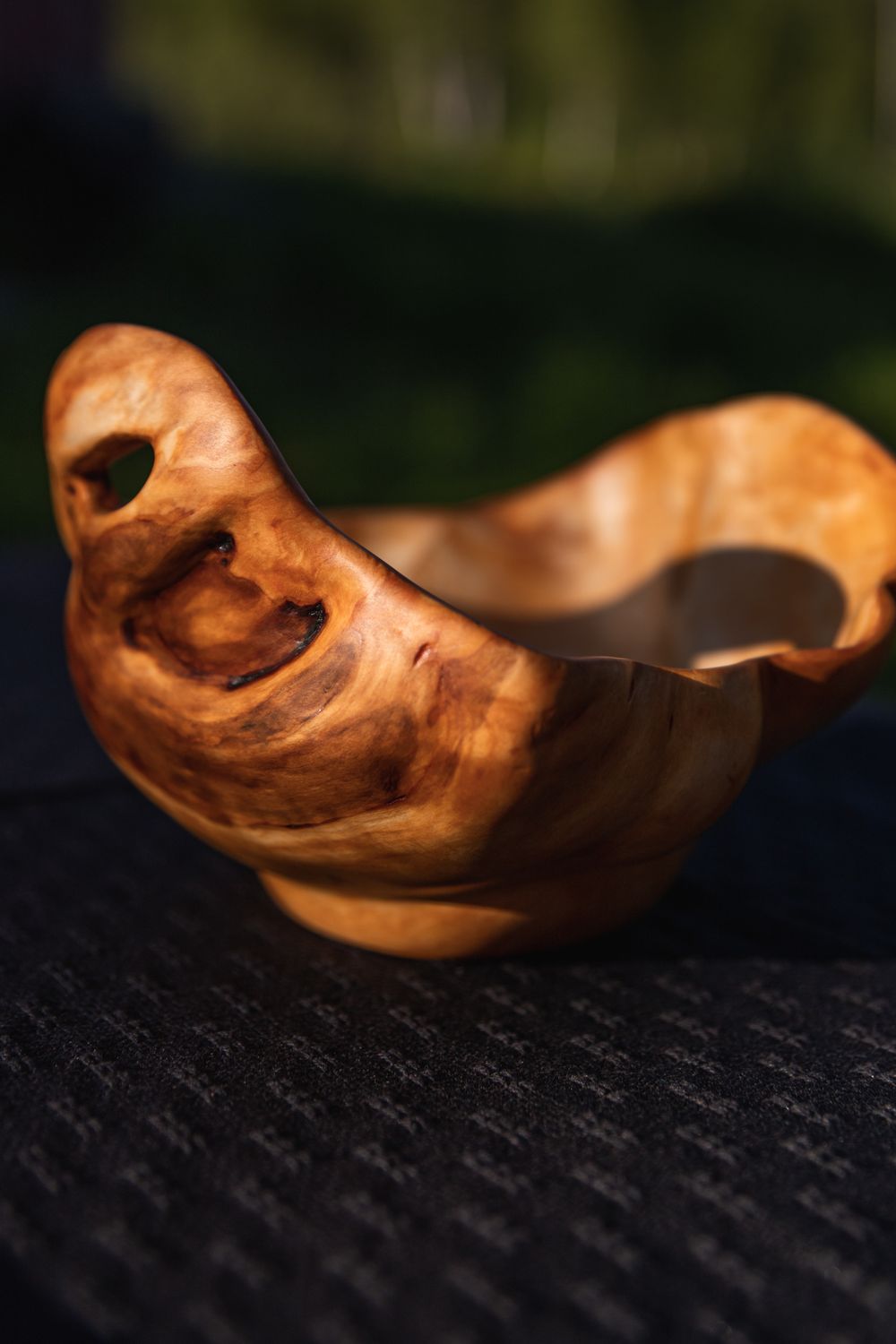
General Finishes Wood Bowl Finish (formerly Salad Bowl Finish), 1 Pint
The default recommendation among woodturners because it is an oil and urethane blend that builds a light protective film, giving real water and food-stain resistance a plain oil cannot match, while still wiping on easily by hand with a cloth. It is widely trusted for bowls, plates, and utensils, and it is food-safe once fully cured. The honest limits: food-safe here means after curing, not on day one, so while it is dry to handle in about 24 hours it reaches full cure in roughly 30 days and is only food-safe then; it is also not meant for active cutting surfaces, and being a wiping varnish it needs thin coats and patience rather than one thick coat.
View on Amazon Editorial illustration.The core decision for a wooden bowl is film finish versus penetrating oil. A film finish sits on top and resists water and staining but must fully cure to be food-safe; a penetrating oil soaks in, is food-safe immediately, but gives little water protection and needs re-oiling. This is for someone who turned or bought a bare wooden bowl and wants it safe for food without guesswork. Here is the pick, a simple oil, and the safety rules.
How do the best options for food safe finish for wooden bowls compare?
| Pick | Product | Why it makes the list |
|---|---|---|
| Top pick | General Finishes Wood Bowl Finish (formerly Salad Bowl Finish), 1 Pint | The default recommendation among woodturners because it is an oil and urethane blend that builds a light protective film, giving real water and food-stain resistance a plain oil cannot match, while still wiping on easily by hand with a cloth. |
| Best penetrating oil and wax | Howard Butcher Block Conditioner (Mineral Oil + Beeswax) | Dead-simple, non-drying, instantly food-safe, and ideal for cutting boards, spoons, and dry-goods bowls. It is a penetrating oil that does not form a film, so it offers little water resistance and must be reapplied regularly. |
| Best natural film, zero solvents | Tried & True Original Wood Finish (Linseed Oil + Beeswax) | Nothing but flax oil and beeswax, no solvents or metallic driers, safe to apply indoors, building a soft protective sheen. It is slow to cure and needs several thin, buffed coats, and impatience gives a tacky surface. |
| Same top pick, bigger size | General Finishes Wood Bowl Finish, 1 Quart | Better value if you finish many bowls. Oil and urethane finishes can skin over in a partly used can, so a quart can go off before a hobbyist uses it up. |
What should you look for in food safe finish for wooden bowls?
A few things separate a good food safe finish for wooden bowls from a frustrating one: film finish vs penetrating oil, cure time is the food-safety gate, not for cutting surfaces, and rag safety. Weigh these before you buy.
- Film finish vs penetrating oil: film finishes build water and stain resistance; penetrating oils soak in and are food-safe immediately but need reapplication, so pick based on whether the bowl holds wet or dry food.
- Cure time is the food-safety gate: General Finishes is handle-dry in about 24 hours but fully cures in roughly 30 days and is food-safe only after curing.
- Not for cutting surfaces: for boards you chop on, use a penetrating oil and wax meant to be renewed.
- Rag safety: oil-soaked rags, especially linseed, can spontaneously combust, so dry them flat outdoors or soak in water before disposal.
Film or oil, and the cure-time catch
Wooden bowl finishes split into two types, and the right one depends on the bowl's job. A film finish like General Finishes builds a thin protective layer on top that resists water and food stains, which is what you want for a bowl that holds wet food or salad, but it is only food-safe after it fully cures, roughly 30 days, not the day you apply it. A penetrating oil like mineral oil and beeswax soaks into the wood, is food-safe immediately, and is perfect for cutting boards and dry-goods bowls, but it does not seal against water and must be reapplied periodically. Whichever you use, never bunch up oily rags, linseed-oil rags in particular can spontaneously combust, so dry them flat outside or soak them in water first.
What are the best alternatives?
Howard Butcher Block Conditioner (Mineral Oil + Beeswax)
Dead-simple, non-drying, instantly food-safe, and ideal for cutting boards, spoons, and dry-goods bowls. It is a penetrating oil that does not form a film, so it offers little water resistance and must be reapplied regularly.
View on AmazonTried & True Original Wood Finish (Linseed Oil + Beeswax)
Nothing but flax oil and beeswax, no solvents or metallic driers, safe to apply indoors, building a soft protective sheen. It is slow to cure and needs several thin, buffed coats, and impatience gives a tacky surface.
View on AmazonGeneral Finishes Wood Bowl Finish, 1 Quart
Better value if you finish many bowls. Oil and urethane finishes can skin over in a partly used can, so a quart can go off before a hobbyist uses it up.
View on AmazonBottom line: General Finishes Wood Bowl Finish is the film pick that resists water and is food-safe once cured; Howard's oil and wax is the instantly-safe, re-oil choice for cutting boards and dry bowls. Let a film finish fully cure before food contact. Pair it with our carving and woodturning guides.
Frequently asked questions
What is the best food safe finish for wooden bowls?
General Finishes Wood Bowl Finish (formerly Salad Bowl Finish), 1 Pint. The default recommendation among woodturners because it is an oil and urethane blend that builds a light protective film, giving real water and food-stain resistance a plain oil cannot match, while still wiping on easily by hand with a cloth.
What should you look for in food safe finish for wooden bowls?
Focus on film finish vs penetrating oil, cure time is the food-safety gate, not for cutting surfaces, and rag safety.
What is a good alternative to the General Finishes Wood Bowl Finish (formerly Salad Bowl Finish), 1 Pint?
The Howard Butcher Block Conditioner (Mineral Oil + Beeswax). Dead-simple, non-drying, instantly food-safe, and ideal for cutting boards, spoons, and dry-goods bowls. It is a penetrating oil that does not form a film, so it offers little water resistance and must be reapplied regularly.
Related buying guides
- Air Purifier for Allergies
- Air Purifier for Pets
- Air Purifier for Mold
- Air Purifier for a Bedroom
- Air Purifier for Smoke
This is a research-based buying guide, not a personal hands-on review. Product details, prices, and availability can change; confirm the current listing on Amazon. As an Amazon Associate I earn from qualifying purchases. Amazon and the Amazon logo are trademarks of Amazon.com, Inc. or its affiliates.
← More Crafts & Making · All guides · How we research · About · Affiliate Disclosure · Privacy Policy · Contact