Nitecore UI2 (Dual-Slot USB-C)
The UI2 hits the beginner sweet spot: two bays, USB-C powered, fully automatic (it detects the cell and picks a safe charge.
View on Amazon → Researched by Johnny Alto · Updated October 12, 2026
Short answer: Our top pick is the Nitecore UI2 (Dual-Slot USB-C). The UI2 hits the beginner sweet spot: two bays, USB-C powered, fully automatic (it detects the cell and picks a safe charge mode with no buttons or.
Top pickNitecore UI2 (Dual-Slot USB-C)View offer →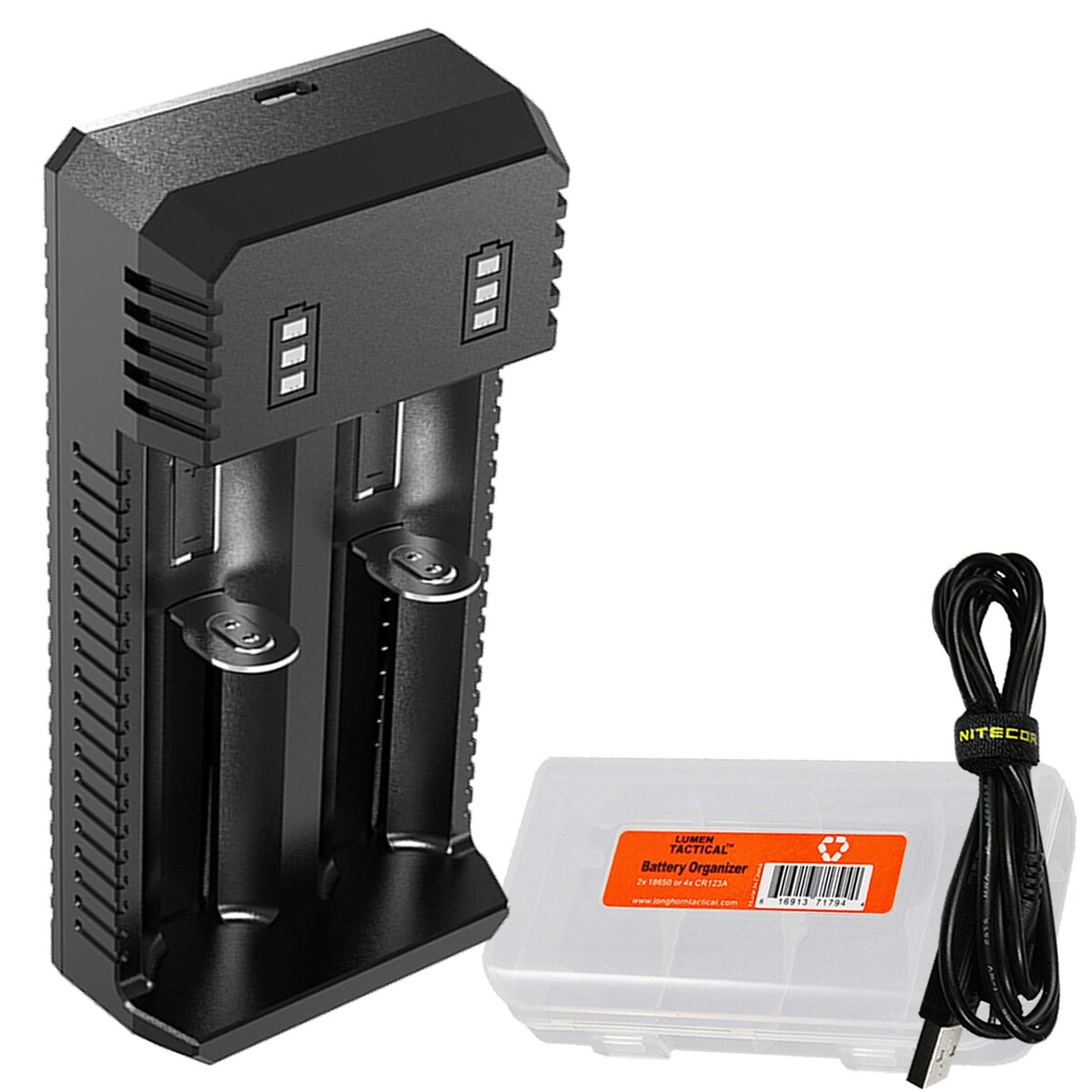
The UI2 hits the beginner sweet spot: two bays, USB-C powered, fully automatic (it detects the cell and picks a safe charge mode with no buttons or settings), and it physically fits.
Most people come to 18650 cells after a flashlight, headlamp, or other device needs real batteries, and the charger is where beginners get burned: either by a fire-hazard no-name brick bundled with the light, or by an over-complicated analyzing charger with menus they do not need. The goal is a safe, simple charger from a trusted flashlight brand that just works, with room to grow. Here is the beginner pick, a display upgrade, and the safety points that matter most.
The UI2 hits the beginner sweet spot: two bays, USB-C powered, fully automatic (it detects the cell and picks a safe charge.
View on Amazon →Four bays, an LCD that shows voltage and capacity, and 3A fast charging.
View on Amazon →Two-bay, dead-simple, trusted brand, usually the lowest price.
View on Amazon →Four bays that also handle AA, AAA, C, and D NiMH, good for a home with many devices.
View on Amazon →A few things separate a good 18650 battery charger for beginners from a frustrating one: bay count, charge current, chemistry detection, and safety first. Weigh these before you buy.
When people step up to 18650 and 21700 lithium cells, they tend to obsess over which battery to buy and treat the charger as an afterthought, which is backwards, because the charger is the single component most responsible for keeping lithium cells safe. A lithium cell is a lot of energy in a small metal can, and the two ways it goes badly wrong are being overcharged past its safe voltage and being charged by something that cannot tell what it is charging. A good hobby charger solves both: it automatically detects the cell chemistry, charges a Li-ion cell to exactly 4.2 volts and then stops, and does the whole thing without you needing to set anything, which is precisely why a simple auto-detecting charger from a reputable flashlight brand is the right first purchase rather than the cheap brick that came taped to a budget flashlight. The features beginners think they need, fast 3A charging and a fancy capacity display, are actually the ones to skip at first: high charge currents stress cells and shorten their life, and the capacity readout only matters once you are into testing and grading cells, which is an intermediate hobby concern. What you genuinely want is modest charge current, reliable termination, chemistry detection, and a brand you can trust not to be a counterfeit, because the counterfeit charger market is real and a fake unit with no proper termination circuit is exactly the thing that turns a cell into a fire. Buy the genuine charger, charge on a hard non-flammable surface, and do not leave cells sitting on it for days, and the lithium-cell hobby is perfectly safe.
Four bays, an LCD that shows voltage and capacity, and 3A fast charging. It does everything the UI2 does plus a capacity readout, but the busier interface and 3A into a small cell are more than a beginner needs.
View on AmazonTwo-bay, dead-simple, trusted brand, usually the lowest price. It is an older platform with slower charging and no USB-C on some revisions.
View on AmazonFour bays that also handle AA, AAA, C, and D NiMH, good for a home with many devices. It is overkill for someone with a single flashlight.
View on AmazonBottom line: the Nitecore UI2 is the safe, simple, no-menus beginner charger, the XTAR VC4SL adds a capacity display, and the i4 covers a whole household. Buy the genuine listing and charge safely. Compare it with our 21700 battery guide and our high-drain 18650 guide.
Nitecore UI2 (Dual-Slot USB-C). The UI2 hits the beginner sweet spot: two bays, USB-C powered, fully automatic (it detects the cell and picks a safe charge mode with no buttons or settings), and it physically fits everything from stubby 16340s up to fat 21700s.
Focus on bay count, charge current, chemistry detection, and safety first.
The XTAR VC4SL (4-bay LCD). Four bays, an LCD that shows voltage and capacity, and 3A fast charging. It does everything the UI2 does plus a capacity readout, but the busier interface and 3A into a small cell are more than a beginner needs.
This is a research-based buying guide, not a personal hands-on review. Product details, prices, and availability can change; confirm the current listing on Amazon. As an Amazon Associate I earn from qualifying purchases. Amazon and the Amazon logo are trademarks of Amazon.com, Inc. or its affiliates.
← More Guides: A–F · All guides · How we research · About · Affiliate Disclosure · Privacy Policy · Contact