Shubb C2 Capo for Nylon String Guitar
The classical version of the industry-standard Shubb, with a wide, dead-flat rubber bar sized specifically for a classical.
View on Amazon → Researched by Johnny Alto · Updated October 12, 2026
Short answer: Our top pick is the Shubb C2 Capo for Nylon String Guitar. The classical version of the industry-standard Shubb, with a wide, dead-flat rubber bar sized specifically for a classical fretboard, so it presses.
Top pickShubb C2 Capo for Nylon String GuitarView offer →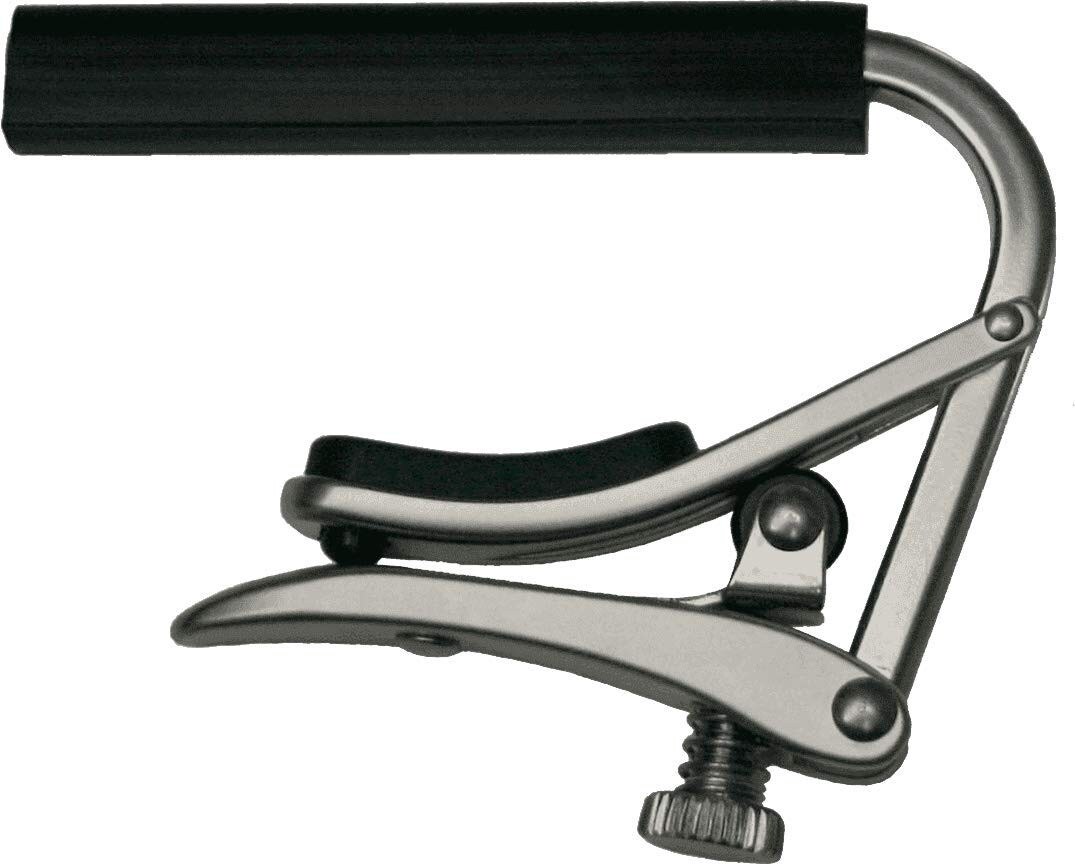
The classical version of the industry-standard Shubb, with a wide, dead-flat rubber bar sized specifically for a classical fretboard, so it presses all six strings evenly without the buzz.
Classical and nylon-string necks are wider (typically a 50 to 52mm nut) and the fretboard is nearly flat, unlike the narrower, radiused fretboards of steel-string guitars. A standard steel-string capo is too short and too curved, so it clamps unevenly and buzzes or mutes strings. You need a capo that is both wide enough and flat, not radiused. This is for classical, flamenco, and wide-neck players. Here is the pick, a one-handed option, and the rule that matters.
The classical version of the industry-standard Shubb, with a wide, dead-flat rubber bar sized specifically for a classical.
View on Amazon →A 64mm pad plus Adaptive Radius Technology self-conforms to any curvature and clamps and releases one-handed, with.
View on Amazon →Spring-loaded and truly one-handed, with a longer flat pad and lighter tension made for nylon strings, and it parks on the.
View on Amazon →Lightweight with a micrometer tension screw so you apply only as much pressure as needed.
View on Amazon →A few things separate a good capo for a classical guitar from a frustrating one: flat, not radiused, width, tension type, and lighter tension is better on nylon. Weigh these before you buy.
Steel-string guitars have a curved (radiused) fretboard and a narrower neck, so their capos have a matching curved, shorter rubber bar. A classical guitar's fretboard is nearly flat and its neck is wider, so putting a curved steel-string capo on it presses the outer strings hard while barely touching the middle ones, which mutes some strings and buzzes others. The fix is a capo made for classical necks: a wide, dead-flat bar (around 64mm) that contacts all six strings evenly. Nylon strings also need less clamping force than steel, so a capo with adjustable or nylon-specific light tension keeps your tuning from going sharp when you clamp on.
A 64mm pad plus Adaptive Radius Technology self-conforms to any curvature and clamps and releases one-handed, with excellent tuning stability. It costs several times the Shubb.
View on AmazonSpring-loaded and truly one-handed, with a longer flat pad and lighter tension made for nylon strings, and it parks on the headstock. The fixed spring tension is not adjustable, so it can pull tuning slightly sharp on some necks.
View on AmazonLightweight with a micrometer tension screw so you apply only as much pressure as needed. The plastic build feels less durable than the Shubb or G7th, and the screw is slower to use.
View on AmazonBottom line: the Shubb C2 is the flat, wide classical standard; go G7th Performance 3 for one-handed self-adjusting use or Kyser for a fast quick-change. The key is flat and wide, not a radiused steel-string capo. Pair it with our humidifier and recording guides.
Shubb C2 Capo for Nylon String Guitar. The classical version of the industry-standard Shubb, with a wide, dead-flat rubber bar sized specifically for a classical fretboard, so it presses all six strings evenly without the buzz you get from a radiused steel-string capo.
Focus on flat, not radiused, width, tension type, and lighter tension is better on nylon.
The G7th Performance 3 Classical (64mm). A 64mm pad plus Adaptive Radius Technology self-conforms to any curvature and clamps and releases one-handed, with excellent tuning stability. It costs several times the Shubb.
This is a research-based buying guide, not a personal hands-on review. Product details, prices, and availability can change; confirm the current listing on Amazon. As an Amazon Associate I earn from qualifying purchases. Amazon and the Amazon logo are trademarks of Amazon.com, Inc. or its affiliates.
← More Music & Audio · All guides · How we research · About · Affiliate Disclosure · Privacy Policy · Contact