Fluval M150 Aquarium Heater
The heater fishkeepers recommend most for a 40 gallon.
View on Amazon → Researched by Johnny Alto · Updated October 12, 2026
Short answer: Our top pick is the Fluval M150 Aquarium Heater. The heater fishkeepers recommend most for a 40 gallon.
Top pickFluval M150 Aquarium HeaterView offer →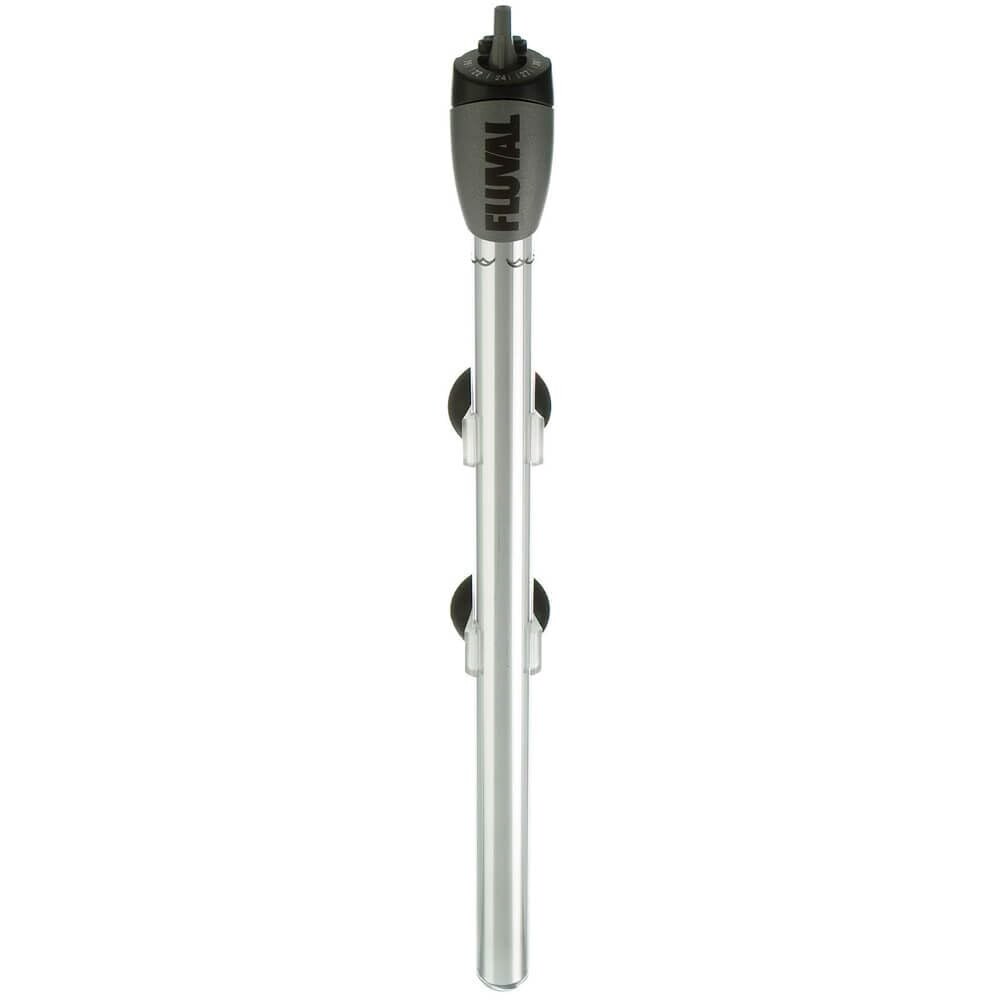
The heater fishkeepers recommend most for a 40 gallon.
A 40 gallon needs roughly 150 watts to hold a stable tropical temperature, and the heater's job is to be accurate and, above all, safe, since a stuck heater can cook a tank. You want the right wattage, a reliable thermostat, and a durable or shatter-resistant build. Look for around 150 watts, an accurate and repeatable thermostat, and a body that survives knocks and temperature swings.
The heater fishkeepers recommend most for a 40 gallon.
View on Amazon →The German heater experienced keepers swear by, with a precise TruTemp dial and a reputation for lasting years.
View on Amazon →A shatter-resistant heater with a tough outer shell and an LED status indicator, at the lowest price here.
View on Amazon →A few things separate a good heater for a 40 gallon aquarium from a frustrating one: right wattage, accurate thermostat, durable body, and safety. Weigh these before you buy.
| Spec | Fluval M150 (pick) | Eheim Jager 150W | Aqueon Pro 150W |
|---|---|---|---|
| Wattage | 150W | 150W | 150W |
| Rated tank | Up to 45 gal | Up to ~40 gal | Up to ~55 gal |
| Build | Borosilicate glass | Glass, TruTemp dial | Shatter-resistant shell |
| Warranty | 3 year | Trusted longevity | LED indicator |
Most keepers put a single 150 to 200 watt heater on a 40 gallon, but the honest answer depends on something the box never prints: how far the heater has to lift the water above your room temperature, not just the tank size. The hobby rule of thumb is about 5 watts per gallon to hold roughly 10°F above room temperature with a lid on the tank (Aquarium Co-Op). To estimate it yourself: multiply gallons by the degrees of rise you need, then divide by two.
40 gallons × degrees of rise ÷ 2. The dashed line marks the 150W top pick.
So the 150 watt Fluval M150 above is right for a 40 gallon in a normal, heated home, where the tank sits only about 5 to 8°F above the room. If your tank lives in a cold basement or a room that dips into the 60s, step up to a 200 watt heater, or better, run two smaller heaters at opposite ends. Aquarium Co-Op recommends splitting the load once you are past about a 10 to 15°F rise: two 100 watt heaters warm the tank more evenly, and if one sticks on or fails, the other limits the damage. On a 40 gallon of livestock that redundancy is worth more than the few dollars a single big heater saves.
The German heater experienced keepers swear by, with a precise TruTemp dial and a reputation for lasting years. Around 150 watts for a 40 gallon; a longtime favorite if you want proven accuracy and are comfortable with a glass heater.
View on AmazonA shatter-resistant heater with a tough outer shell and an LED status indicator, at the lowest price here. The near-unbreakable body is reassuring in a busy tank, and it holds temperature well for a 40 gallon on a budget.
View on AmazonBottom line: the Fluval M150 is the durable, accurate pick for a 40 gallon; the Eheim Jager is the aquarist favorite and the Aqueon Pro is the shatter-resistant value.
Fluval M150 Aquarium Heater. The heater fishkeepers recommend most for a 40 gallon.
Focus on right wattage, accurate thermostat, durable body, and safety.
The Eheim Jager TruTemp 150W. The German heater experienced keepers swear by, with a precise TruTemp dial and a reputation for lasting years. Around 150 watts for a 40 gallon; a longtime favorite if you want proven accuracy and are comfortable with a glass heater.
This is a research-based buying guide, not a personal hands-on review. Product details, prices, and availability can change; confirm the current listing on Amazon. As an Amazon Associate I earn from qualifying purchases. Amazon and the Amazon logo are trademarks of Amazon.com, Inc. or its affiliates.
← More Pets & Aquariums · All guides · How we research · About · Affiliate Disclosure · Privacy Policy · Contact