IsoAcoustics OREA Bronze
Best ready-made choice for many turntables: 8 lb capacity per unit and no tuning or assembly.
View on Amazon → Researched by Johnny Alto · Updated October 12, 2026
Short answer: The IsoAcoustics OREA Bronze is the best ready-made isolation foot for many desk-mounted turntables. Each unit is rated for up to 8 lb, so three support up to 24 lb when the deck's weight is distributed evenly; weigh the turntable and choose the OREA size before buying.
Best for: reducing vibration transmitted through a rigid desk or shelf. Skip it if: footsteps make the record skip on a springy floor—wall mounting or a properly tuned spring platform can address that lower-frequency problem more directly.
Top pickIsoAcoustics Orea Bronze IsolatorsView offer →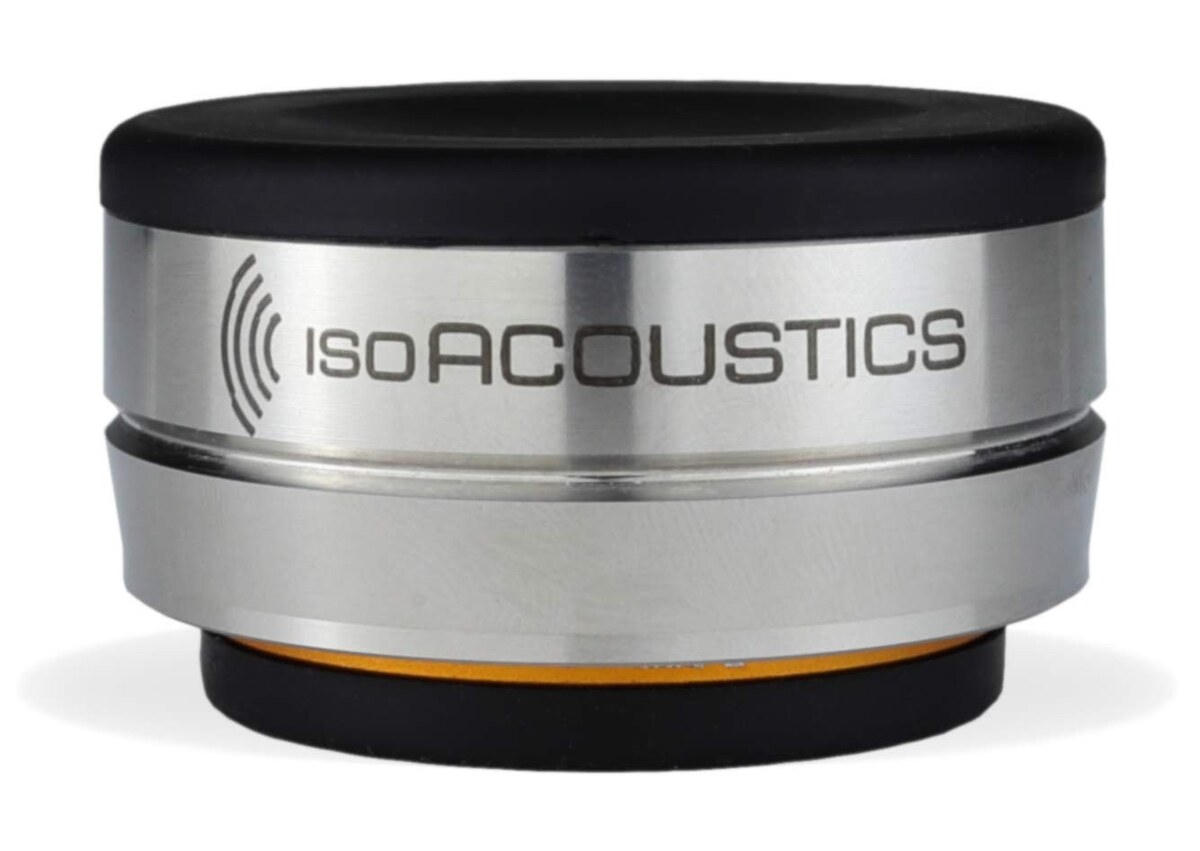
Each isolator supports up to 8 lb, making a three-foot set a practical match for many turntables under 24 lb.
A turntable on a desk is the worst-case setup for vibration: the desk is a lightweight resonant surface, and every keyboard tap, mouse thud, or footfall travels up the legs into the stylus, causing muddy bass, reduced clarity, and in bad cases actual needle skipping. Isolation feet decouple the deck's plinth from the desk so that vibration does not reach the cartridge. This is for anyone running a Pro-Ject, Rega, U-Turn, or Audio-Technica deck on a desk or shelf. Here is the pick, a spring option, and how to size it.
Best ready-made choice for many turntables: 8 lb capacity per unit and no tuning or assembly.
View on Amazon →A lower-frequency spring design for footfall problems, but load and leveling require more careful setup.
View on Amazon →The same design with a 4 lb capacity per unit for lighter components.
View on Amazon →A low-cost experiment for desk-borne vibration, provided the material and load are matched correctly.
A few things separate a good isolation feet for a turntable on a desk from a frustrating one: load rating is per foot, and you need at least three, buy three or four, springs vs firm isolators, and placement. Weigh these before you buy.
Both decouple a turntable from vibration, but they target different problems, so match the tool to your symptom. Firm constrained-layer isolators like the IsoAcoustics Orea excel at killing the microvibration and airborne and structural energy that muddy the bass and blur imaging, and they keep the deck stable and easy to cue, which is what most desk setups need. But if your real problem is heavy footfall on a bouncy floor that makes the needle physically skip, a firm isolator may not fully cure it, because low-frequency floor bounce needs a much softer, lower-resonance suspension, which is where steel spring feet like the Nobsound come in, though the deck visibly bobs on them. Whichever you choose, remove the turntable's stock rubber feet and set the isolators directly under the plinth, and size the load rating to the deck's weight over at least three feet.
Real steel spring suspension has a much lower resonant frequency, so it decouples low-frequency floor and footfall energy better, and users report it stops turntable thump and skipping when the rack is bumped, with add or remove springs to tune for weight. The deck visibly bounces on springs, which some find unstable and which can make cueing awkward.
View on AmazonThe same Orea design in a smaller 4 lb/foot size, ideal for light belt-drive tables like a Pro-Ject Debut or U-Turn. Four pounds per foot means three feet support only about 12 lb, so it is easy to exceed with a heavier deck or glass platter.
View on AmazonA few dollars of soft polymer feet under the plinth absorb mid and high-frequency vibration for almost nothing. Soft polymer compresses over time, gives less precise support than machined feet, and does little for low-frequency footfall.
Bottom line: the IsoAcoustics Orea Bronze is the pick that tightens bass and imaging by decoupling the deck from a resonant desk (buy three or four, sized to your turntable's weight); go Nobsound springs if footfall is making the needle skip. Match the load rating per foot. Pair it with our phono preamp and monitor isolation guides.
IsoAcoustics Orea Bronze Isolators. The sweet-spot model for a typical 8 to 13-lb turntable: each foot is rated to 8 lb and IsoAcoustics recommends a minimum of three per component, so a set of three covers up to 24 lb, and it is a compact machined-stainless constrained-layer isolator whose top flange grips the underside of the plinth while the bottom grips the desk, killing wobble and tightening bass and imaging, the most consistently reported improvement.
Focus on load rating is per foot, and you need at least three, buy three or four, springs vs firm isolators, and placement.
The Nobsound Spring Isolation Feet (4-Pack). Real steel spring suspension has a much lower resonant frequency, so it decouples low-frequency floor and footfall energy better, and users report it stops turntable thump and skipping when the rack is bumped, with add or remove springs to tune for weight. The deck visibly bounces on springs, which some find unstable and which can make cueing awkward.
This is a research-based buying guide, not a personal hands-on review. Product details, prices, and availability can change; confirm the current listing on Amazon. As an Amazon Associate I earn from qualifying purchases. Amazon and the Amazon logo are trademarks of Amazon.com, Inc. or its affiliates.
← More Music & Audio · All guides · How we research · About · Affiliate Disclosure · Privacy Policy · Contact