Dr. Infrared Heater DR-988 (240V, 5600W)
For a cold uninsulated garage this is the honest workhorse choice because it is electric, so there is no combustion, no.
View on Amazon → Researched by Johnny Alto · Updated October 12, 2026
Short answer: Our top pick is the Dr. Infrared Heater DR-988 (240V, 5600W). For a cold uninsulated garage this is the honest workhorse choice because it is electric, so there is no combustion, no carbon-monoxide risk, and no.
Top pickDr. Infrared Heater DR-988 (240V, 5600W)View offer →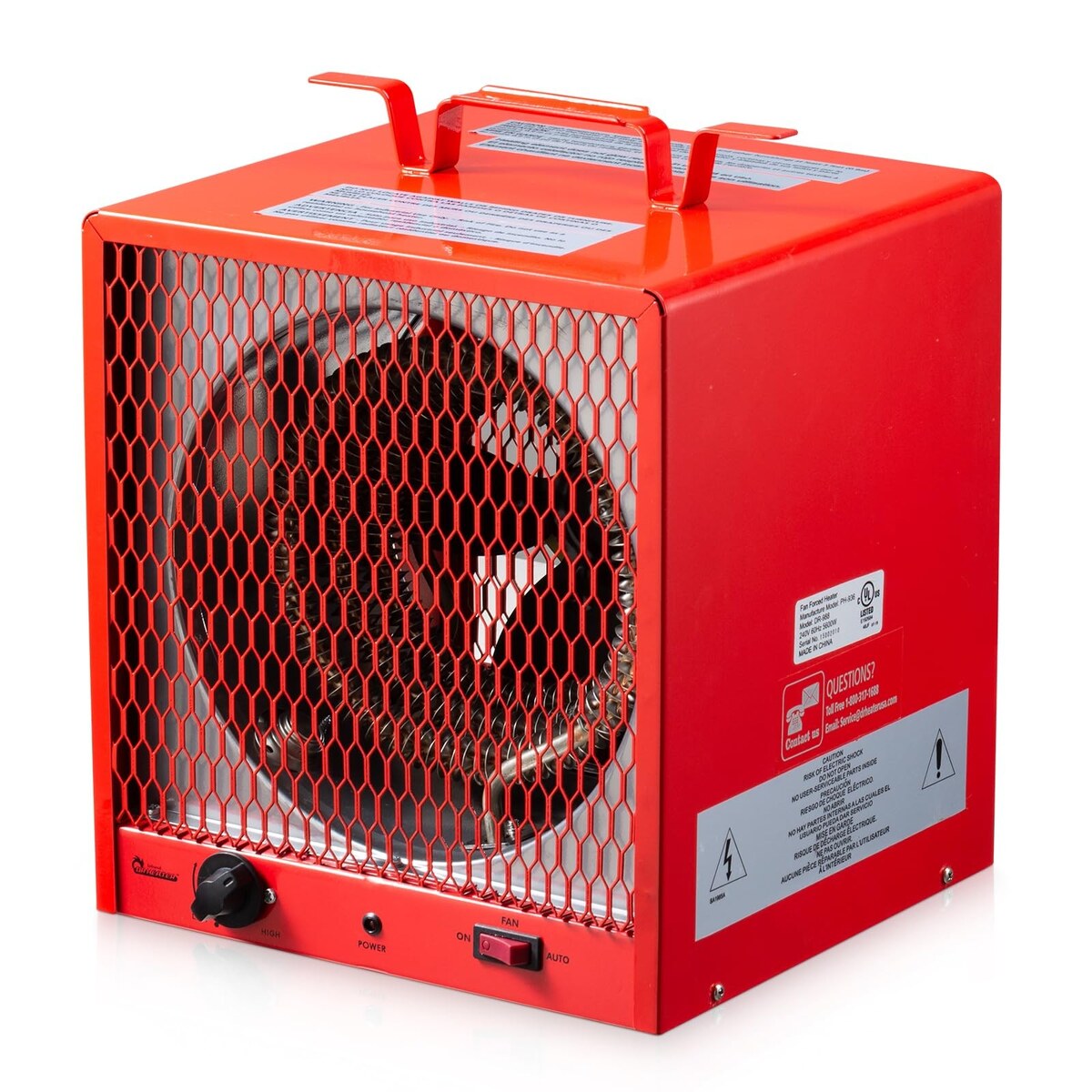
For a cold uninsulated garage this is the honest workhorse choice because it is electric, so there is no combustion, no carbon-monoxide risk, and no moisture dumped into the space, which.
A garage heater is a different problem than a room heater, because the space is big, uninsulated, and often has no 240V outlet, so a $30 desk heater does nothing. This is for the DIYer deciding among a high-output 240V electric unit, a wire-free propane heater, and a permanent hardwired ceiling heater, and it takes the safety tradeoffs seriously. Here is the electric workhorse pick, a no-wiring propane option, and how to size and vent one without risking carbon monoxide or a fire.
For a cold uninsulated garage this is the honest workhorse choice because it is electric, so there is no combustion, no.
View on Amazon →Needs no electrical work at all, running off 1 lb bottles or a 20 lb tank, so it heats a garage with no 240V outlet and.
View on Amazon →Mounts to the ceiling out of the way, with a built-in thermostat, for a clean permanent install in a regularly-used shop.
View on Amazon →Plugs into any standard outlet, cheap, zero install, and safe with no combustion.
A few things separate a good space heater for a garage from a frustrating one: size to the space, power source is the deciding factor, propane = co risk (critical), and require safety features. Weigh these before you buy.
The garage-heater decision usually comes down to electric versus propane, and the tradeoff is real on both sides. Electric high-output heaters (like the 5600W Dr. Infrared, or a hardwired ceiling unit) are the safer choice for an enclosed garage because they burn nothing: no carbon monoxide, no oxygen consumption, and no water vapor to rust your tools. The cost is power, because a heater big enough to warm a real garage needs a dedicated 240-volt, 30-amp circuit that most garages lack, so unless you already have that outlet you are budgeting for an electrician. Propane heaters like the Big Buddy flip the equation: they need no wiring at all and work in a power outage, which is genuinely useful, but they are combustion appliances, and that is where safety becomes non-negotiable. A propane heater consumes oxygen and produces carbon monoxide, a colorless, odorless gas that can kill, plus water vapor that raises humidity. So if you run propane you must provide ventilation (crack a door or window), install a battery-powered CO alarm in the garage, and never, ever leave it running unattended or while you sleep. Whichever you choose, size it to about 10 watts or 34 BTU per square foot for an uninsulated space, insist on tip-over and overheat shutoffs, and keep it well clear of gas cans, oily rags, and sawdust.
Needs no electrical work at all, running off 1 lb bottles or a 20 lb tank, so it heats a garage with no 240V outlet and even in a power outage, with an oxygen-depletion sensor and tip-over shutoff. It is a combustion heater, so it consumes oxygen and produces carbon monoxide and water vapor: it MUST have ventilation, needs a CO alarm nearby, and must never run unattended or while sleeping.
View on AmazonMounts to the ceiling out of the way, with a built-in thermostat, for a clean permanent install in a regularly-used shop. It is hardwired (no plug) on a 240V/30A circuit and needs an electrician plus heavy-gauge wiring, so it is not plug-and-play.
View on AmazonPlugs into any standard outlet, cheap, zero install, and safe with no combustion. At 1500W (~5,100 BTU) it simply will not keep a cold, uninsulated 2-car garage warm, so it is only realistic for a small, semi-insulated space or spot heat.
Bottom line: the Dr. Infrared DR-988 is the safe, high-output electric workhorse if you have (or can add) a 240V circuit; the Mr. Heater Big Buddy heats a garage with no wiring but demands ventilation and a CO alarm, and the Fahrenheat is the clean permanent install. Size to your space and take the fuel safety seriously. Pair it with our oil-radiator and garage-DIY guides.
Dr. Infrared Heater DR-988 (240V, 5600W). For a cold uninsulated garage this is the honest workhorse choice because it is electric, so there is no combustion, no carbon-monoxide risk, and no moisture dumped into the space, which makes it far safer than propane for a closed garage.
Focus on size to the space, power source is the deciding factor, propane = co risk (critical), and require safety features.
The Mr. Heater Big Buddy 18,000 BTU Propane (MH18B). Needs no electrical work at all, running off 1 lb bottles or a 20 lb tank, so it heats a garage with no 240V outlet and even in a power outage, with an oxygen-depletion sensor and tip-over shutoff. It is a combustion heater, so it consumes oxygen and produces carbon monoxide and water vapor: it MUST have ventilation, needs a CO alarm nearby, and must never run unattended or while sleeping.
This is a research-based buying guide, not a personal hands-on review. Product details, prices, and availability can change; confirm the current listing on Amazon. As an Amazon Associate I earn from qualifying purchases. Amazon and the Amazon logo are trademarks of Amazon.com, Inc. or its affiliates.
← More Automotive & Garage · All guides · How we research · About · Affiliate Disclosure · Privacy Policy · Contact