Fenix HM65R
Best overall for car work: separately controlled flood and spot beams, USB-C charging, and IP68 durability.
View on Amazon → Researched by Johnny Alto · Updated October 12, 2026
Short answer: The Fenix HM65R is the best headlamp for working on cars because its independently controlled flood and spotlight cover both close engine-bay work and deeper inspection. It is USB-C rechargeable, accepts a replaceable 18650 battery, and is rated IP68.
Best for: mechanics who want one durable headlamp for close and long-range work. Skip it if: you mainly need a detachable magnetic work light or the lightest possible headband.
Top pickFenix HM65R (1400lm, dual spot + flood)View offer →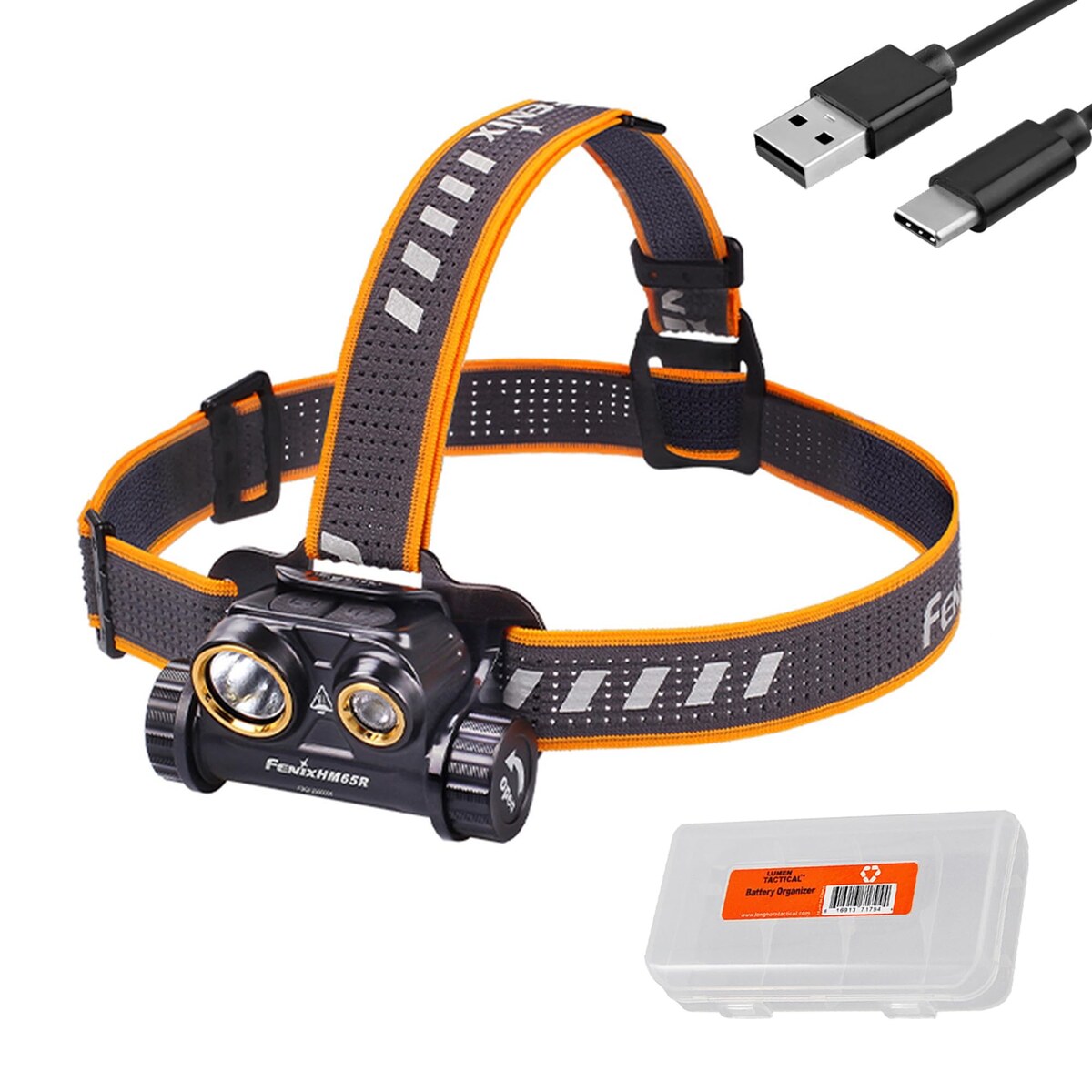
The HM65R's key advantage for car work is its two independently controlled emitters: a wide flood for the area right in front of you plus a separate spotlight for seeing down into a fender.
A mechanic's headlamp has the opposite job of a running headlamp: you want a wide, even flood that lights the whole engine bay or footwell right in front of you, not a tight long-throw beam that blinds you off the firewall. Comfort for hours, a tilting head, and ideally a magnetic option to stick it to the fender all matter more than raw beam distance. This is for the DIYer or pro turning wrenches. Here is the dual-beam pick, magnetic and simple options, and why flood and high CRI win.
Best overall for car work: separately controlled flood and spot beams, USB-C charging, and IP68 durability.
View on Amazon →A detachable right-angle light with a magnetic tailcap, useful when a headlamp is awkward under a hood.
View on Amazon →A lighter headband and broad flood for close work, with less flexibility than a dual-beam model.
A simple widely available option with an aimable flood and straightforward controls.
A few things separate a good headlamp for working on cars from a frustrating one: flood over throw, comfort for long jobs, magnetic and tilt, and runtime and rating. Weigh these before you buy.
Headlamps get marketed as one category, but a headlamp for working on cars and a headlamp for trail running want almost opposite things, and buying the wrong type is why some people find a headlamp useless under the hood. A running headlamp is designed to throw light down a dark trail, so it favors a focused beam that reaches far ahead, and that is exactly wrong for car work, because when you are bent over an engine bay everything you care about is a foot or two from your face, and a tight throw beam aimed at close range creates a small hot circle surrounded by shadow and reflects blindingly back off the shiny firewall and painted surfaces. What a mechanic actually needs is a wide, even flood that washes soft light across the whole area right in front of you, which is why the best wrenching headlamps either have a dedicated flood emitter or, better, two emitters, a flood for the near work plus a separate spot for when you genuinely need to see across the shop or deep into a fender. Color rendering matters more here than almost anywhere else, too, because you are constantly distinguishing a blue wire from a green one, reading faded labels, and trying to spot the sheen of a fluid leak, all of which a high-CRI emitter makes dramatically easier than the blue-tinted light of a cheap headlamp. The rest of the priorities follow from spending hours in a dirty environment: a tilting head so you can aim the light down without craning your neck, a comfortable strap and a light head unit that does not slip when you are upside down under a dash, real durability and an IP rating to survive grease and drops, and ideally a magnetic option so the light can come off your head and stick to the car as a work light when that angle serves you better. Judge it on flood, CRI, comfort, and durability, not on how far it throws.
A right-angle body that detaches from the headband to become a magnetic-tailcap work light you can stick to the car, with a high-90-CRI flood that shows true wire and fluid colors. The multi-mode interface is fiddlier than Fenix's and turbo runtime is short.
View on AmazonLight, comfortable, and a wide flood that is well regarded. Nitecore's NU lineup shares model names across many relistings, so verify the exact current model and its listing before buying, and it is lower-output and less rugged than the metal-bodied lights.
Easy one-hand dial dimming and a pure flood pattern, widely available. Coast churns SKUs frequently, so confirm the exact model's listing and that it is the flood-pivot version, and the beam and build are a step below the enthusiast brands.
Bottom line: the Fenix HM65R is the durable dual-beam mechanic's headlamp, the Wurkkos HD15 adds a detachable magnetic work light, and the compact options suit lighter jobs. Favor a wide flood and high CRI over throw. Compare it with our garage work light guide and our dog-walking flashlight guide.
Fenix HM65R (1400lm, dual spot + flood). The HM65R's key advantage for car work is its two independently controlled emitters: a wide flood for the area right in front of you plus a separate spotlight for seeing down into a fender or across the shop, so you are not stuck with one compromise beam.
Focus on flood over throw, comfort for long jobs, magnetic and tilt, and runtime and rating.
The Wurkkos HD15 (2000lm, magnetic tail). A right-angle body that detaches from the headband to become a magnetic-tailcap work light you can stick to the car, with a high-90-CRI flood that shows true wire and fluid colors. The multi-mode interface is fiddlier than Fenix's and turbo runtime is short.
This is a research-based buying guide, not a personal hands-on review. Product details, prices, and availability can change; confirm the current listing on Amazon. As an Amazon Associate I earn from qualifying purchases. Amazon and the Amazon logo are trademarks of Amazon.com, Inc. or its affiliates.
← More Automotive & Garage · All guides · How we research · About · Affiliate Disclosure · Privacy Policy · Contact