Portable power stations
Battery backup for apartments, outages and mobile use, with multiple capacity classes.
- Official U.S. store
- Check output and battery capacity
- Confirm solar-panel compatibility
Find out what is allowed, what fits your home and what could lower your bill—before you spend money on a system.
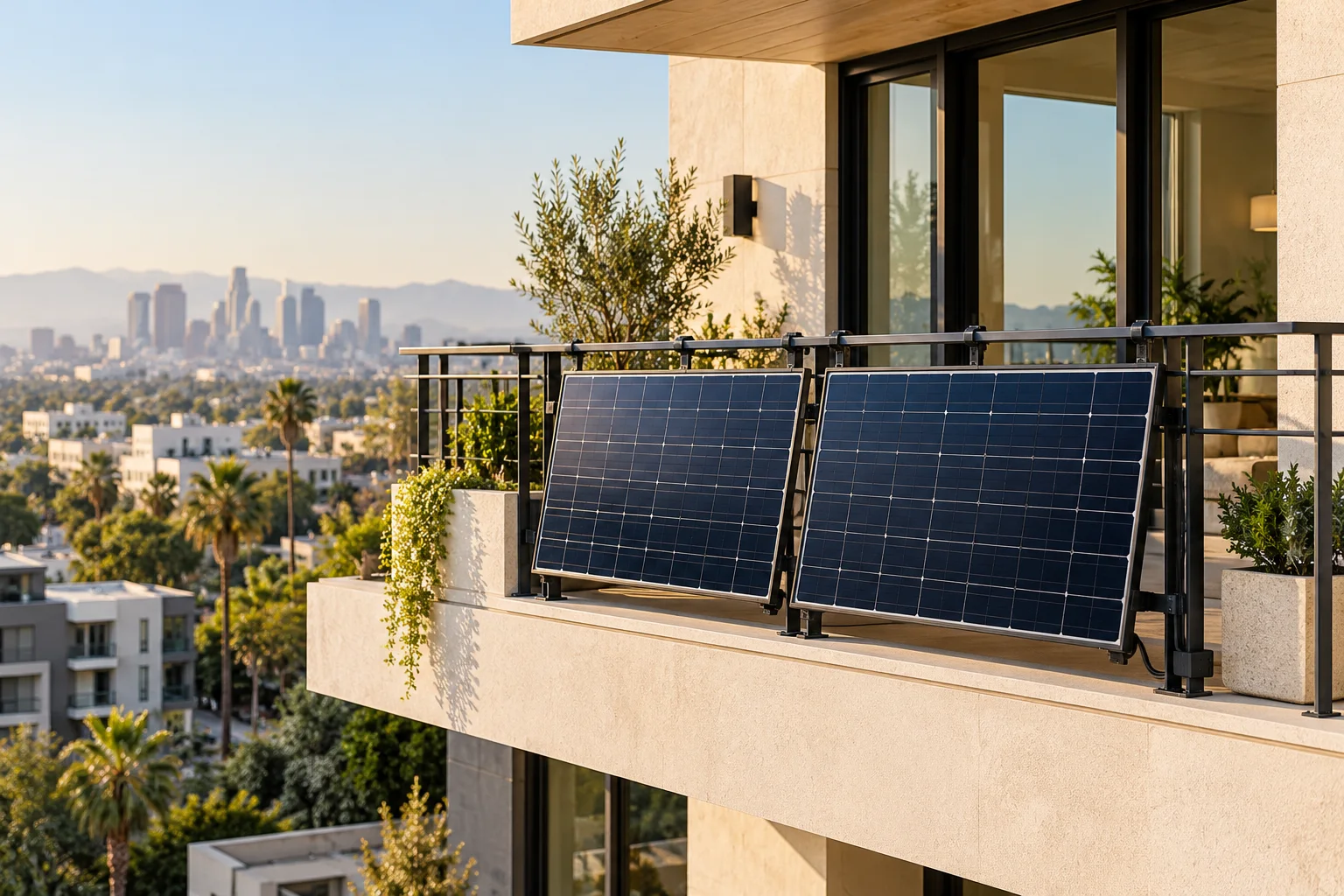
Plug-in solar is not legal under one nationwide rule. Start with the state, then verify the utility, complete system and property.
See the U.S. guide →Each guide starts with a direct answer, names what remains uncertain and links to the evidence. We separate plug-in photovoltaic systems from batteries and ordinary portable panels.
Effective date, 1,200W AC limit, system certification, utility notice and the 2030 repeal.
Read the sourced answer → Free calculatorEstimate annual generation, bill savings and simple payback from five clear inputs.
Run the calculator → Buyer protectionSee why a complete grid-connected system is not the same thing as a portable panel or battery.
Compare the categories →Twenty-five focused pages cover the buying journey from first explanation to legal check, product evidence and savings. Every legal and product-status page shows its sources and checked date.
A certified panel, inverter or battery does not automatically make the assembled system compliant. We look for evidence at the complete-system and state level.
These products can provide portable solar charging or backup power. They are not presented as California-qualified plug-in PV systems.
Battery backup for apartments, outages and mobile use, with multiple capacity classes.
Portable power stations paired with compatible panels for backup and off-grid charging.
Foldable and suitcase-style panels for compatible batteries, RVs and off-grid systems.
Affiliate disclosure: merchant links are marked sponsored. UsedItFirst may earn a commission if partner tracking is active, at no added cost to you. Products are included for relevance, not commission rate. Full disclosure.
Laws, certification programs and U.S. product availability are changing quickly. Every legal or product-status claim on this hub carries a checked date and a source.
It is a small photovoltaic system designed to connect to a building electrical circuit through a receptacle. It differs from a portable power station, which stores energy and powers devices without feeding a building circuit.
No. Rules vary by state, utility and property. A product being sold online does not prove that it can be used where you live.
Potentially, but renters should check current law, lease and building rules, safe mounting, outlet suitability and complete-system certification before buying.
No. A power station stores electricity and supplies connected appliances. A plug-in PV system sends solar electricity into a building circuit, which creates different certification and regulatory questions.